Why sovereignty does not come from Brussels but from entrepreneurs who build the best product
A precision machine in a Swiss plant. Swiss-owned, on Swiss soil, under Swiss law. And it can be switched off from California. No soldier crosses a border, no court in Lausanne is asked. It takes an update that never arrives, a license that lapses, a chip that loses its clearance.
This is not an exception. It is the normal state of an economy that has built its production on systems whose lever sits somewhere else. The sovereignty debate today is about server locations and data residency, as if the question were settled the moment the disk sits in Zurich.
Sovereignty once meant something precise: the monopoly on legitimate force over a territory. Whoever held the ground held the rules, by force if it came to that. For more than three hundred years that was the definition, and it held, because enforcement was bound to a place.
That binding is now dissolving. And with it a certainty on which the owners of an entire continent build their plans. The ground is still theirs. Control over what runs on it is not.
Power always had an address
It is worth recalling why this held for so long. A state could enforce a rule at a company’s site because the site sat on its soil. Taxation, oversight, seizure if it came to that, all of it worked because the thing, the machine, the person were physically within reach. To escape, you had to leave the territory, and that was expensive, visible and rare.
Sovereignty over the ground therefore sounds like the goal. It never was. It was the method that happened to be available. The ground was where enforcement landed, because power only reached as far as it could physically reach. The state’s reach ended at its border, and that was not a flaw but the operating premise.
The whole order rests on a quiet assumption. That coercion needs a body standing somewhere. That you have to be present to enforce. As long as that held, location was the right question. The assumption no longer holds.
How to pull the plug from afar
Three developments of recent months show that enforcement no longer needs the ground. They sit on different layers, but it is the same pattern.
The first layer is the model. On 12 June 2026 the US government ordered Anthropic to cut off foreign access to two of its most capable AI models. The company shut them down worldwide, for every customer, to comply. No customs, no border crossing. An agency in Washington decided, and a tool that was running in Europe went silent the next day.
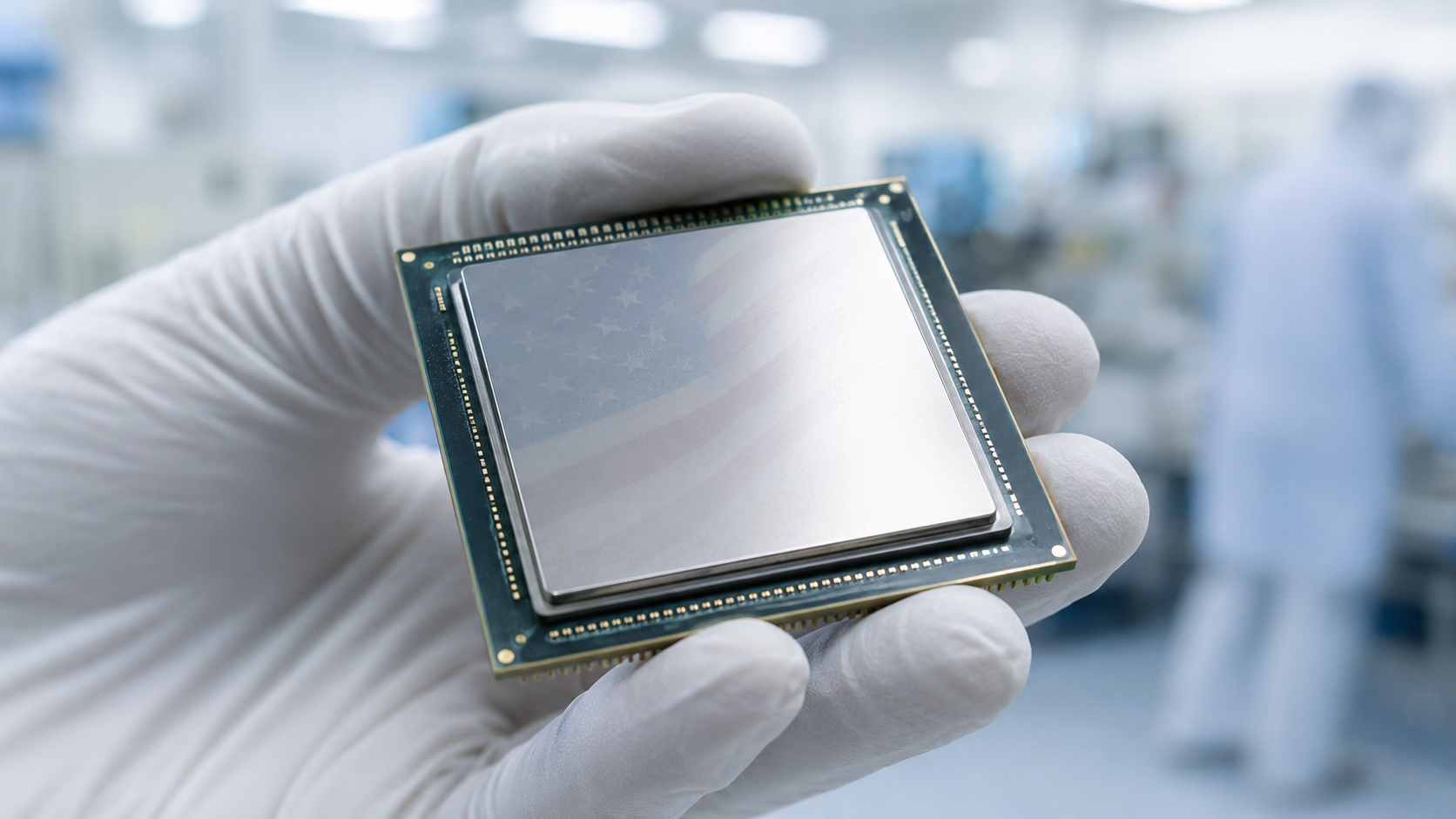
The second layer is the silicon. A bill that passed a House committee unanimously in March 2026 would force every exported AI chip to verify its location continuously. The Commerce Department would then keep a record of where American silicon sits on foreign soil. The same text instructs the agencies to study ways of remotely disabling chips that end up where they should not. Not law yet, but the direction is on the page.
The third layer is ownership. Where the parent company sits decides whose law applies. Put an American parent above a German subsidiary and the US CLOUD Act reaches the data, no matter whether the servers stand in Frankfurt. The European stamp on the letterhead then says nothing about who can ultimately reach in.
Model, silicon, ownership. Switches that do not ask where you stand. They ask what you depend on.
Is the state becoming a hacker?
Now the uncomfortable part. Look at the mechanism rather than the intent, and three actors collapse into one set who should have nothing in common.
The state that blocks access to a model. The vendor that decides through its update channel and license how its tool may be used. The attacker who slips through a vulnerability into the same system. Technically all of them reach for the same lever, control over a system someone else depends on. What separates them is not the mechanism. It is the mandate.
That this line blurred long ago is not a thought experiment but a precedent. Stuxnet, some fifteen years back, was code that physically destroyed Iranian centrifuges without a soldier crossing a border. State-built, with the attacker’s means. A state disabled a facility on foreign soil through control of a system alone. The difference from the criminal intruder lay not in the method, only in the mandate.
The same pattern, kinetic rather than digital, for years with armed drones that kill from afar, and today with Ukrainian drones striking targets deep inside Russia. Effect without crossing a border, without troops.
This is the narrow line a whole order balances on. The legitimate state and the criminal intruder no longer differ in what they can do, only in the permission to do it. Accountability is the last remaining dividing line, and it is an attribution, not a technical barrier.
For an owner, three questions turn sharp that used to be delegable. Who holds the lever over the systems the business runs on? Who bears the consequences when it is pulled? And how much of that can still be handed to a vendor, a location, a contract?
Power has run without borders before
Anyone sensing the end of order here should step back and ask the bigger question. How power is organized has shifted fundamentally before, and it is shifting again.
Before the territorial state, power ran through networks, not across surfaces. The Hanseatic League enforced rules across half of Europe without owning a square meter, through control of the trade routes alone. The Templars were a financial and military power across kingdoms, bound to an order, not to ground. The Medici rose through banking, financed popes and princes and produced popes of their own, long before they ever held a duchy. Their power came from money, not from land.
Then came the territorial state. The Peace of Westphalia in 1648 bound power to the ground and to the monopoly on legitimate force over it. That was the second age, and it held for more than three hundred years. Regulation and law are its operating system, and they work because behind every rule stands a monopoly on force that can enforce it in one place. Whoever wrote rules in that age exercised sovereignty, because they held the ground the rules applied to.
Now the next begins. Digital and economic dominance allows enforcement again without ground and without force. Whoever controls the chokepoint, the model, the chip, the channel everything runs through, enforces from anywhere. Against anyone who depends on it. Power detaches from territory and reorganizes around nodes and dependencies, as it did before the nation-state. Only this time the node does not sit in a merchant guild but in a data center, and the state that hosts it has learned to use it as a lever.
Anyone can write rules
Here comes the qualification that decides everything, and with it two clarifications without which the thought would overreach.
First, this reach is no law of nature of American power. It holds exactly as long as the world needs American chips and models. A Swiss machine builder or a German carmaker could wire the same mechanism into its products, a location lock, a remote kill. It would lose the market, because no one depends on that particular product. The ability to enforce this sovereignty does not follow the wish, it follows indispensability. Sovereignty today is no longer granted by state definition, it is the result of what a country’s economy can build that the whole world wants. And that takes the best product, not the best-protected one.
Second, the monopoly on force has not vanished, and regulation is not over. What ends is the assumption that whoever writes the rules thereby exercises sovereignty. Anyone can write rules. Only those who hold the ground, or the economic chokepoint and the value the world is after, can enforce them.
This is exactly where Europe stands. We still act as if we controlled the ground (one could write a separate article about that), and so we believe we can issue new rules every day. But European industry no longer holds the chokepoint. So we regulate what others build and call it sovereignty. That is a fundamental misjudgment, built on the spent operating principles of the second age. We in Europe have not yet understood that a new age of sovereignty has begun.
And so the circle closes back to the start. Sovereignty was never the ground, not even before. It was always the strength no one could route around, once force, today the market that can assert itself. The ground is still ours, supposedly. But the sovereignty of tomorrow is not born in the rulebook, it is born in what we build that the world cannot replace.